Virtues of Hajj and ‘Umrah
Umrah is also known as the ‘minor Hajj’. It is a Sunnah and can be performed anytime during the year...

Makkah holds an unmatched spiritual and historical significance in Islam. It is home to the Kaabah, the sacred House of Allah and the Qibla toward which more than two billion Muslims around the world turn in prayer each day. According to Islamic tradition, the Kaabah was first built by Prophet Ādam (عليه السلام) as the first House of Allah on earth, and later its foundations were raised again by Prophet Ibrāhīm (عليه السلام) and his son Ismāʿīl (عليه السلام) in obedience to Allah’s command, as mentioned in the Qur’an (2:127). Makkah is also the birthplace of Prophet Muhammad ﷺ, who spent 53 years of his life in this sacred city. It was in its surroundings that the first revelation (waḥy) of the Qur’an descended upon him, marking the beginning of Islam. Within Makkah lies the blessed Well of Zamzam, whose miraculous origin dates back to the time of Prophet Ismāʿīl (عليه السلام) and continues to provide water to pilgrims to this day. The Qur’an itself honors Makkah, referring to it as the first house established for humanity and a place of blessing and guidance (Qur’an 3:96), underscoring its central role in faith, worship, and Islamic history.

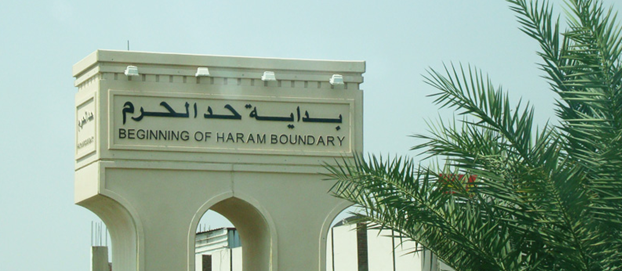
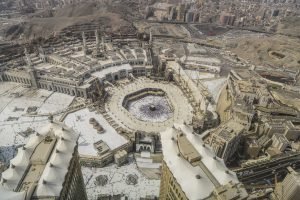
The Sacred Precinct (al-Ḥaram al-Makkī) refers to the blessed boundary surrounding al-Masjid al-Ḥarām, established by Allāh ﷻ through His Messenger Ibrāhīm عليه السلام under the guidance of Jibrīl عليه السلام. Later, the Messenger of Allāh ﷺ reaffirmed these boundaries on the day of Fatḥ Makkah, and the Khulafāʾ al-Rāshidūn renewed their markings thereafter. Among the well-known points of these boundaries are al-Tanʿīm towards Madīnah, al-Ḥudaybiyah towards Jeddah, and ʿArafāt towards Ṭāʾif. Within this sacred area, unique rulings apply: hunting is forbidden, trees and plants are not to be cut, bloodshed is prohibited, and even picking up lost items is restricted except with the intention to announce them. These boundaries are tawqīfī (fixed by divine instruction) and cannot be altered by human reasoning.
The sanctity of al-Ḥaram is such that both good deeds and sins carry multiplied weight. Allāh ﷻ warns against committing disobedience within this sanctuary, for sins here are more severe than elsewhere. According to Hadith, offering prayer in the Haram of Makkah carries a reward one hundred thousand times greater than praying anywhere else. Scholars have explained that this multiplication applies not only to prayer but to all righteous deeds performed within the Haram. Thus, for the believer, being within the precincts of al-Ḥaram is both a tremendous honor and a heavy responsibility, demanding utmost reverence, humility, and devotion.
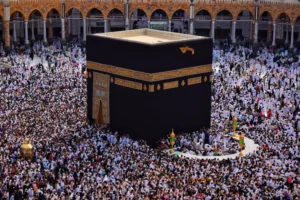
The Kaʿbah, also known as al-Bayt al-ʿAtīq and al-Bayt al-Ḥarām, is the most sacred structure in Islām and the qiblah of the Muslims around the world. Its foundations were first laid by Sayyidunā Ādam عليه السلام by the command of Allāh ﷻ, and later it was rebuilt and elevated by Sayyidunā Ibrāhīm عليه السلام and his son Sayyidunā Ismāʿīl عليه السلام. Allāh ﷻ mentions this in the Qur’ān: “And [mention] when Ibrāhīm raised the foundations of the House, and [with him] Ismāʿīl, [saying], ‘Our Lord, accept [this] from us; indeed You are the Hearing, the Knowing’” (al-Baqarah 2:127). Since then, the Kaʿbah has been the center of tawḥīd and the symbol of Muslim unity. Throughout history, it has been reconstructed several times, but its sanctity and centrality remain unchanged.
The Kaʿbah is a cubical structure with four corners, each having its own significance. The Ḥajar al-Aswad (Black Stone) is set in the eastern corner, which pilgrims strive to kiss or touch during ṭawāf, following the Sunnah of the Prophet ﷺ. The Rukn al-Yamānī, facing Yemen, is another honored corner where the Prophet ﷺ would touch his blessed hand during ṭawāf. The corner facing Shām is called Rukn al-Shāmī, while the corner towards ʿIrāq is known as Rukn al-ʿIrāqī. Between the Black Stone and Rukn al-Yamānī lies the Multazam, a place where duʿāʾ is accepted. The interior of the Kaʿbah contains the Ḥaṭīm (also called Ḥijr Ismāʿīl), a semi-circular area that was originally part of the Kaʿbah built by Ibrāhīm عليه السلام but was left out in later reconstructions. Each of these corners and sections carries immense spiritual significance, reminding the believer of the legacy of Ibrāhīm عليه السلام and the honor granted to this Sacred House by Allāh ﷻ.
The birthplace of Prophet Muhammad ﷺ is located in near Masjid al-Ḥarām. According to early historians, the Prophet ﷺ was born in this house on Monday, in the month of Rabīʿ al-Awwal and in the “Year of the Elephant.” Over time, the site was preserved, and today it houses the Maktabat Makkah al-Mukarramah (Makkah Library), which visitors can see from outside; entry is generally not permitted for pilgrims, but it remains a notable landmark near the Haram.
The house of Sayyidatunā Khadījah bint Khuwaylid رضي الله عنها, the noble Mother of the Believers and the first wife of the Messenger of Allāh ﷺ, was located in close proximity to al-Masjid al-Ḥarām in Makkah al-Mukarramah. It was in this blessed home that the Prophet ﷺ resided for nearly twenty-five years, and where the early years of Islām unfolded in secrecy and patience. Within these walls, the first revelation was received by the Prophet ﷺ, and it was here that Fāṭimah al-Zahrāʾ رضي الله عنها and most of the noble children of the Prophet ﷺ were born. This house served as a center of daʿwah, sacrifice, and steadfastness in the path of Allāh.
In later centuries, the exact site of the house became known, but with the expansion of the Ḥaram, its structure no longer remains. Today, the location is remembered as a place of great blessing and reverence, connected to the pure life of Sayyidatunā Khadījah رضي الله عنها and the early struggles of the Messenger of Allāh ﷺ.
Location: For many years, this location was marked and in more recent times, it was situated close to the Maktabah Makkah al-Mukarramah (the Makkah Library), which itself stands near Bāb al-ʿUmrah, not far from al-Masjid al-Ḥarām. However, one can make an idea of the place and surrounding area of the house f Sayyidatunā Khadījah رضي الله عنها.
Ghaar Ḥirāʾ is situated upon Jabal al-Nūr (the Mountain of Light), at a short distance from al-Masjid al-Ḥarām in Makkah al-Mukarramah. This blessed cave was the place where Sayyidunā Muḥammad al-Muṣṭafā ﷺ would seclude himself for days and nights in worship, reflection, and remembrance of Allāh ﷻ. He ﷺ would provision himself with food and water, remain in solitude, and then return to his noble family.
It was in this sacred cave that the greatest event in human history took place — the beginning of waḥy (revelation). When the Messenger of Allāh ﷺ reached the age of forty, during the month of Ramaḍān, Sayyidunā Jibrīl ʿalayhis-salām descended with the first verses of the Qur’ān al-Karīm. As mentioned in Ṣaḥīḥ al-Bukhārī and Ṣaḥīḥ Muslim, Jibrīl ʿalayhis-salām embraced the Prophet ﷺ and commanded him: “Iqraʾ — Read!” until finally he recited:
اقْرَأْ بِاسْمِ رَبِّكَ الَّذِي خَلَقَ. خَلَقَ الْإِنسَانَ مِنْ عَلَقٍ. اقْرَأْ وَرَبُّكَ الْأَكْرَمُ. الَّذِي عَلَّمَ بِالْقَلَمِ. عَلَّمَ الْإِنسَانَ مَا لَمْ يَعْلَمْ
(Recite in the Name of your Lord Who created; created man from a clot. Recite, and your Lord is the Most Generous, Who taught by the pen, taught man what he knew not.) — Sūrat al-ʿAlaq 96:1-5
Thus, the mission of Nubuwwah began in Ghaar Ḥirāʾ, making it a place of immense significance in the history of Islām and a site remembered with reverence by the Ummah.
Ghaar Thawr is a blessed cave situated on Jabal Thawr, located to the south of Makkah al-Mukarramah. This sacred place became eternally significant during the momentous event of the Hijrah. When the Messenger of Allāh ﷺ set out towards al-Madīnah al-Munawwarah, he was accompanied by his beloved Companion, Abū Bakr al-Ṣiddīq رضي الله عنه. The Quraysh, enraged by his departure, pursued them with the intent to harm him. The Prophet ﷺ and Abū Bakr رضي الله عنه sought refuge in this cave, where they remained hidden for three nights. During this time, Allāh ﷻ protected His Messenger ﷺ in a miraculous manner, so much so that the pursuers came to the very mouth of the cave but did not see them.
This event is directly mentioned in the Noble Qur’ān, where Allāh ﷻ says:
إِلَّا تَنصُرُوهُ فَقَدْ نَصَرَهُ اللَّهُ إِذْ أَخْرَجَهُ الَّذِينَ كَفَرُوا ثَانِيَ اثْنَيْنِ إِذْ هُمَا فِي الْغَارِ إِذْ يَقُولُ لِصَاحِبِهِ لَا تَحْزَنْ إِنَّ اللَّهَ مَعَنَا
“If you do not help him, then indeed Allāh has already helped him, when those who disbelieved drove him out, and he was one of two, when they were in the cave, when he said to his Companion: ‘Do not grieve; surely Allāh is with us.’” — Sūrat al-Tawbah (9:40)
This verse highlights both the divine protection granted to the Prophet ﷺ and the unique honor of al-Ṣiddīq رضي الله عنه in being his sole companion in that critical moment. The stay in Ghaar Thawr stands as a lesson of tawakkul (trust in Allāh), sabr (patience), and yaqīn (certainty) that the victory of Allāh is always near.
The plain of ʿArafāt lies about 20 kilometers east of Makkah al-Mukarramah. It is the most significant station of Ḥajj, for the Messenger of Allāh ﷺ said: “Al-Ḥajj is ʿArafah” (Sunan al-Tirmidhī, 889). Pilgrims stand here on the 9th of Dhul-Ḥijjah from after Ẓuhr until Maghrib, engaged in duʿāʾ, dhikr, and repentance. It is obligatory to remain here (wuqūf ʿArafāt), without which the Ḥajj is not valid. Within ʿArafāt lies Masjid Namirah, where the Prophet ﷺ delivered part of his Farewell Sermon (Khuṭbat al-Wadāʿ), addressing the Ummah with timeless words on justice, equality, and the completion of dīn.
In earlier centuries, ʿArafāt was an open desert plain, with pilgrims gathering under the hot sun, relying only on minimal provisions. Today, the area is organized with clear boundaries, roads, and facilities to serve the millions who gather. The mount known as Jabal al-Raḥmah (Mount of Mercy) remains a landmark where the Prophet ﷺ stood and supplicated, and where pilgrims continue to make heartfelt duʿāʾ. The perfection of Islām was declared here with the revelation: “This day I have perfected for you your religion, completed My favor upon you, and chosen for you Islām as your religion” (Sūrat al-Māʾidah 5:3).
Minā is a valley situated between Makkah and Muzdalifah, about 5 kilometers from al-Masjid al-Ḥarām. It is most known as the place of Ramy al-Jamārāt (the stoning of the devils), where pilgrims throw pebbles at the three stone pillars, commemorating the rejection of Shayṭān by Ibrāhīm ʿalayhis-salām. It is also the site of animal sacrifice (udhḥiyah or hady) on Yawm al-Naḥr, the 10th of Dhul-Ḥijjah. The Messenger of Allāh ﷺ stayed in Minā during his Ḥajj, performing Ramy, sacrifice, and spending the nights there, saying: “Learn your rituals from me” (Ṣaḥīḥ Muslim, 1297).
In the past, Minā was a simple valley where pilgrims would rest under temporary tents. Today, the entire valley is filled with thousands of air-conditioned white tents, arranged in neat rows, providing accommodation to the Ḥujjāj during the Ayyām al-Tashrīq (11th–13th Dhul-Ḥijjah). The Jamarāt Bridge complex now facilitates safe stoning of the pillars, reflecting how the rites of Ḥajj remain preserved, while modern arrangements ease the challenges for pilgrims.
Muzdalifah lies between ʿArafāt and Minā. After departing from ʿArafāt on the night of the 10th of Dhul-Ḥijjah, pilgrims spend the night here in prayer and rest. It is the place where they collect pebbles for Ramy and perform Maghrib and ʿIshāʾ combined. Staying in Muzdalifah until just before Fajr is a Wājib act of Ḥajj, and the Messenger of Allāh ﷺ stood here in duʿāʾ at al-Mashʿar al-Ḥarām, in accordance with the Qur’ān:
فَإِذَا أَفَضْتُم مِّنْ عَرَفَاتٍ فَاذْكُرُوا اللَّهَ عِندَ الْمَشْعَرِ الْحَرَامِ
“Then when you depart from ʿArafāt, remember Allāh at al-Mashʿar al-Ḥarām.” — Sūrat al-Baqarah 2:198
In the early centuries, Muzdalifah was a vast open land where pilgrims would rest on the ground with only the sky above them. Today, while it remains open in essence, paved roads, lighting, and designated areas mark the site, though pilgrims still sleep under the open sky in humble remembrance of Allāh. It was here that the Prophet ﷺ instructed moderation and calmness, saying: “Be tranquil, for righteousness is not in rushing” (Ṣaḥīḥ al-Bukhārī, 1671).
Jannat al-Muʿallā, also known as al-Ḥajūn, is the ancient graveyard of Makkah al-Mukarramah, located northeast of al-Masjid al-Ḥarām at a short distance. This blessed cemetery has been in use since before Islām and holds immense significance, as it is the resting place of many noble personalities from the family of the Prophet ﷺ and the early Muslims. Most notably, Sayyidatunā Khadījah al-Kubrā رضي الله عنها, the beloved wife of the Prophet ﷺ, rests here, as does his grandfather ʿAbd al-Muṭṭalib, and other noble forefathers. From among the Ṣaḥābah, companions such as ʿAbdullāh ibn al-Zubayr رضي الله عنهما, Asmaʾ bint Abī Bakr رضي الله عنها, and several others are buried in this blessed ground.
In the present day, the graveyard remains open for visitors after ʿAṣr Ṣalāh, and entry is permitted for men only. Standing before these graves reminds the believer of the sacrifices of the pioneers of Islām and of the reality of life and death, making it a place of both history and spiritual reflection.
Masjid al-Jinn, situated near Jannat al-Muʿallā in Makkah al-Mukarramah, marks the blessed site where a group of jinn listened attentively to the recitation of the Noble Qur’ān by the Messenger of Allāh ﷺ. The incident is mentioned in Sūrah al-Jinn, where Allāh ﷻ says: “Say: It has been revealed to me that a group of jinn listened and said, ‘Indeed, we have heard a wondrous Qur’ān’” (al-Jinn 72:1). After hearing the recitation, the jinn accepted Islām and returned to their people to spread the message. This masjid was later established at that very spot to commemorate this event. Historically, the place was a simple area, but today it is a built masjid known to the people of Makkah and visitors alike. Its significance lies in reminding believers of the universality of the Prophet’s ﷺ message, which was not only for mankind but also for the jinn.
ʿAyn Zubaydah is the famous water spring and aqueduct system in Makkah, named after Sayyidah Zubaydah bint Jaʿfar, the noble wife of the ʿAbbāsid Caliph Hārūn al-Rashīd. Witnessing the hardships faced by the ḥujjāj due to scarcity of water, she devoted immense wealth to construct a remarkable network of canals and tunnels that carried fresh water from the springs of Ṭāʾif to Makkah and ʿArafāt. This great work, completed in the 2nd century Hijrī, became a continuous source of ease and relief for pilgrims, especially during the days of Ḥajj, and remained functional for centuries. It stands as a shining example of khidmah (service) to the guests of Allāh. In the modern era, remnants of ʿAyn Zubaydah’s channels still exist, and while the system itself is no longer in full use due to advanced water supply infrastructure, it continues to be remembered as one of the most important charitable projects in the history of Ḥajj.
Umrah is also known as the ‘minor Hajj’. It is a Sunnah and can be performed anytime during the year...

Performing Umrah is a deeply spiritual journey, and every Muslim who can afford it should strive to undertake it. Visiting...
Al-Madinah Al-Munawwarah (The Enlightened City) holds a place of deep love and reverence in the heart of every Muslim as...
WhatsApp us